

We’ve all heard about the stock market, but what exactly is it, and why does it matter? At 5StarsStocks .com Stock Market, we believe understanding the stock market is crucial for anyone looking to grow their wealth or secure their financial future. The stock market is a complex system that has an influence on our economy, businesses, and personal finances in ways we might not even realize.
In this beginner’s guide, we’ll break down the basics of the stock market. We’ll explore what the stock market is, dive into its key components, and explain how stock prices work. We’ll also cover the essentials to get you started with investing, including popular stock exchanges like the NYSE and NASDAQ, and important indexes such as the Dow Jones Industrial Average and S&P 500. By the end, you’ll have a solid foundation to start your journey into the world of stocks and investing.
What is the Stock Market?
The stock market is a complex network where investors buy and sell shares of publicly traded companies. It’s a crucial part of our financial system, allowing businesses to raise capital and investors to potentially grow their wealth. At 5StarsStocks .com Stock Market, we believe understanding the stock market is essential for anyone looking to secure their financial future.
Definition of stocks
Stocks, also known as shares or equity, represent ownership in a company. When we purchase a stock, we’re essentially buying a small piece of that business. This ownership comes with certain rights, such as voting on company matters and potentially receiving a portion of the company’s profits through dividends or capital appreciation. The total value of a company’s outstanding shares is known as its market capitalization, which fluctuates based on the current stock price and the number of shares issued.
Types of stocks
There are several types of stocks available to investors. The most common are common stocks and preferred stocks. Common stocks give shareholders voting rights and a claim on the company’s profits, but they’re last in line during liquidation. Preferred stocks, on the other hand, often come with a fixed dividend and priority during liquidation, but typically don’t include voting rights.
Other classifications include growth stocks, which are expected to grow faster than the broader market, and value stocks, which trade at a discount relative to their perceived worth. We also have income stocks, known for providing regular dividends, and blue-chip stocks, which represent well-established, financially stable companies.
How the stock market works
The stock market operates as an organized platform where buyers and sellers come together to trade shares. It works on the principle of supply and demand, with share prices fluctuating based on the perceived value of companies and overall market conditions. When more people want to buy a stock than sell it, the price typically rises, and vice versa.
Stock exchanges, such as the New York Stock Exchange (NYSE) or NASDAQ, provide the infrastructure for these trades to take place. They maintain orderly markets, ensure compliance with regulations, and disseminate real-time price information. Modern stock markets largely operate electronically, with sophisticated computer systems matching buy and sell orders almost instantaneously.
Understanding how the stock market works is crucial for anyone looking to invest. At5StarsStocks .com Stock Market, we’re committed to helping you navigate this complex world of financial markets and make informed investment decisions.
Key Components of the Stock Market
At 5StarsStocks .com Stock Market, we believe understanding the key components of the stock market is essential for anyone looking to invest. The stock market is a complex system with several interconnected parts that work together to facilitate trading and investment.
Stock exchanges
Stock exchanges are the heart of the stock market. These organized marketplaces provide a centralized location for buying and selling securities. The New York Stock Exchange (NYSE) and NASDAQ are two of the most prominent exchanges in the United States. While the NYSE still has a physical trading floor, NASDAQ operates entirely electronically.
Stock exchanges play a crucial role in our financial system by offering a platform for companies to raise capital by selling their stocks and bonds to the public. They ensure fair trading practices and maintain investor confidence by enforcing rules and regulations. Additionally, exchanges provide real-time information on securities prices, making it easy for investors to access up-to-date stock prices on financial news sites.
One of the key functions of stock exchanges is to provide liquidity, allowing investors to buy or sell stocks relatively easily during trading hours. This ability to quickly execute trades is essential for a well-functioning market.
Market indices
Market indices are another vital component of the stock market. These are statistical measures used to track the performance of a group of stocks, providing a snapshot of overall market trends. Some of the most well-known indices include:
- The Dow Jones Industrial Average (DJIA): This index tracks 30 large, publicly-owned companies trading on the NYSE and NASDAQ.
- The S&P 500: This index includes 500 of the largest U.S. companies and is often considered a better representation of the overall market than the Dow.
- The NASDAQ Composite: This index includes nearly all stocks listed on the NASDAQ exchange and is heavily weighted towards technology companies.
These indices serve as benchmarks for investors and fund managers to measure their performance against the broader market. They also provide valuable insights into economic trends and market sentiment.
Brokers and traders
Brokers and traders are essential players in the stock market ecosystem. Brokers act as intermediaries between investors and the stock exchange, executing buy and sell orders on behalf of their clients. They can be individuals or firms, offering various levels of service and expertise.
Full-service brokers provide comprehensive financial advice and personalized services, while discount brokers offer a more hands-off approach at lower costs. Online brokerage firms have gained popularity in recent years, providing user-friendly platforms for electronic trading.
Traders, on the other hand, take a more active role in the market. They aim to capitalize on short-term price movements, often using technical analysis and market trends to make quick decisions. While traders can potentially make significant profits, they also face higher risks due to market volatility.
At 5StarsStocks .com Stock Market, we emphasize the importance of understanding these key components when navigating the stock market. Whether you’re a long-term investor or interested in more active trading, having a solid grasp of how stock exchanges, market indices, and the roles of brokers and traders function will help you make more informed decisions in your investment journey.
Understanding Stock Prices
We’ve all seen stock prices fluctuate, but what really drives these changes? Let’s dive into the factors that influence stock prices and how we can interpret them.
Supply and demand
At its core, the stock market operates on the principle of supply and demand. When more people want to buy a stock than sell it, the price goes up. Conversely, if more people want to sell than buy, the price falls. This constant push and pull between buyers and sellers is what determines a stock’s price at any given moment.
For example, if a company releases positive news about its earnings, more investors might want to buy its stock, driving up the price. On the flip side, if there’s negative news, more people might want to sell, causing the price to drop.
Factors affecting stock prices
Several key factors can impact stock prices:
- Company performance: A company’s financial health, earnings reports, and future outlook can significantly influence its stock price. Strong earnings often lead to higher stock prices, while disappointing results can cause a decline.
- Economic conditions: The overall state of the economy, including factors like GDP growth, employment rates, and inflation, can affect stock prices across the board.
- Industry trends: Changes within a specific industry can impact the stock prices of companies in that sector. For instance, technological advancements or shifts in consumer preferences can create winners and losers within an industry.
- Investor sentiment: Sometimes, stock prices move based on how investors feel about a company or the market in general. This can be influenced by news, rumors, or even social media chatter.
- Interest rates: When interest rates change, it can affect stock prices. Generally, lower interest rates tend to boost stock prices, while higher rates can have a cooling effect.
Reading stock quotes
To understand stock prices, it’s crucial to know how to read a stock quote. Here are some key components:
- Last price: This is the most recent price at which the stock traded.
- Bid price: The highest price a buyer is willing to pay for the stock.
- Ask price: The lowest price a seller is willing to accept for the stock.
- Day’s range: The highest and lowest prices the stock has traded at during the current day.
- 52-week range: The highest and lowest prices the stock has traded at over the past year.
- Volume: The number of shares traded during the current day.
Understanding these elements can give us valuable insights into a stock’s performance and market sentiment.
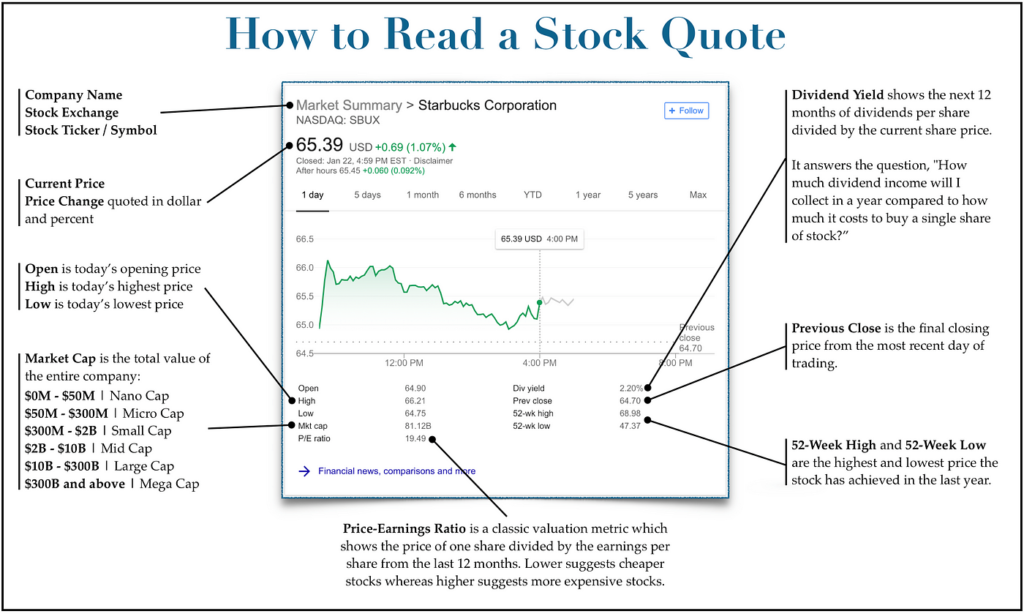
By grasping these fundamentals of stock prices, we can make more informed decisions when investing in the stock market. Remember, while short-term price fluctuations are common, it’s the long-term performance that often matters most for investors.
5StarsStocks .com Stock Market Guides
5StarsStocks .com Stock Market provides an array of resources to empower investors in making informed stock purchasing decisions. Think of it as your toolbox for smart stock picks across different investment styles and industries.
5StarsStocks .com Stock Market Investment Style Guides
- Growth Stocks: Discover high-potential companies primed for rapid expansion. This guide helps you identify key metrics and trends for spotting these future market leaders.
- Value Stocks: Learn the art of uncovering hidden gems trading below their intrinsic worth. This guide delves into fundamental analysis and strategies for value investing success.
- Dividend Stocks: Explore the world of steady income through reliable dividend-paying companies. This guide highlights factors to consider when building a dividend-focused portfolio.
5StarsStocks .com Stock Market Industry-Specific Guides
- Cannabis Stocks: Navigate the emerging cannabis industry with insights on regulatory developments, market trends, and key players.
- Technology Stocks: Stay ahead in the fast-paced tech sector. This guide helps you assess innovative companies and identify potential investment opportunities.
5StarsStocks .com Stock Market Beyond “Stocks Buy”
- Stock Market Basics: If you’re new to investing, start with the platform’s foundational guides on understanding the stock market, choosing the right stocks, and utilizing essential tools.
- Success Stories: Gain inspiration from real-life investors who’ve achieved their financial goals.
- Expert Insights: Access analysis and recommendations from seasoned professionals to help you make confident decisions.
Remember, 5StarsStocks.com doesn’t offer direct buy/sell recommendations. Instead, it empowers you with the knowledge and tools to make your own informed choices aligned with your financial goals and risk tolerance. By exploring these guides, you can develop your investment strategy and navigate the stock market with greater confidence.
Getting Started with Investing based on 5StarsStocks .com Stock Market
We’re excited to help you begin your journey into the world of investing. Getting started can seem daunting, but with the right approach, it’s easier than you might think. Let’s break down the process into manageable steps.
Opening a brokerage account
The first step in your investing journey is to open a brokerage account. This is where you’ll buy and sell stocks, bonds, mutual funds, and other securities. Many online brokers offer user-friendly platforms that make it simple to get started. When choosing a broker, consider factors like fees, available investment options, and educational resources.
We recommend comparing a few different brokers before making your decision. Look for one that aligns with your goals and offers the tools you need. Some brokers even allow you to open an account with as little as $1000 or less. Once you’ve selected a broker, the application process is usually straightforward and can often be completed online in a matter of minutes.
Developing an investment strategy
With your brokerage account set up, it’s time to develop your investment strategy. This involves determining your financial goals, risk tolerance, and time horizon. Are you investing for retirement, a down payment on a house, or something else? How much risk are you comfortable taking? These questions will help shape your approach.
One popular strategy for beginners is to start with a diversified portfolio of low-cost index funds or exchange-traded funds (ETFs). These provide exposure to a broad range of stocks or bonds, helping to spread your risk. As you gain more experience and knowledge, you can consider adding individual stocks or other investments to your portfolio.
Remember, investing is a long-term game. It’s often better to focus on consistent, regular investments rather than trying to time the market. Consider setting up automatic contributions to your investment account to take advantage of dollar-cost averaging.
Common mistakes to avoid
As you start your investing journey, be aware of some common pitfalls. One of the biggest mistakes new investors make is letting emotions drive their decisions. It’s natural to feel anxious when the market dips, but panic selling can lead to missed opportunities. Similarly, don’t get caught up in the hype of the latest investment trend without doing your research.
Another mistake to avoid is neglecting to diversify your portfolio. Putting all your money into a single stock or sector can be risky. Instead, spread your investments across different asset classes and industries to help manage risk.
Lastly, don’t forget about fees. While many brokers now offer commission-free trading, other fees can still eat into your returns over time. Be sure to understand all the costs associated with your investments and choose low-cost options when possible.
By avoiding these common mistakes and sticking to a well-thought-out strategy, you’ll be well on your way to building a solid investment portfolio. Remember, investing is a journey, and it’s okay to start small and learn as you go. The most important step is simply getting started.
Conclusion on 5StarsStocks .com Stock Market
The stock market has a significant influence on our financial landscape, affecting everything from personal investments to global economic trends. Through our exploration of its key components, including exchanges, indices, and the factors driving stock prices, we’ve gained valuable insights into this complex system. Understanding these elements equips us to make more informed decisions and navigate the market with greater confidence.
For those looking to start their investment journey, remember that knowledge is power. By opening a brokerage account, developing a sound strategy, and steering clear of common pitfalls, you’re setting yourself up for long-term success. While the stock market can seem daunting at first, it offers opportunities for growth and financial stability. With patience, research, and a well-thought-out approach, anyone can take steps to build a solid investment portfolio and work towards their financial goals.
